Azerbaijani carpet weaving
A carpet is written, not decorated.
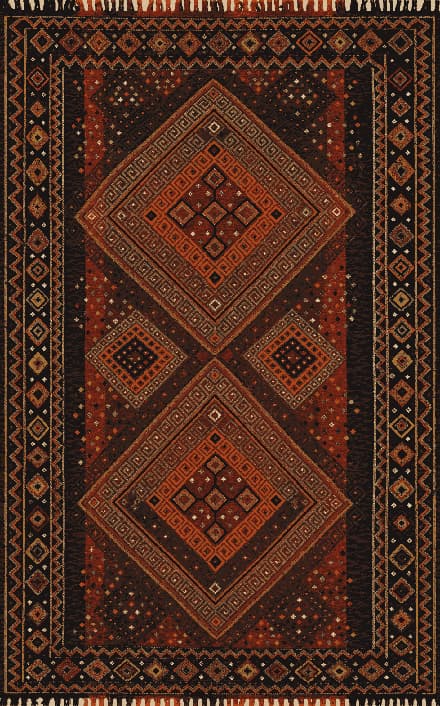
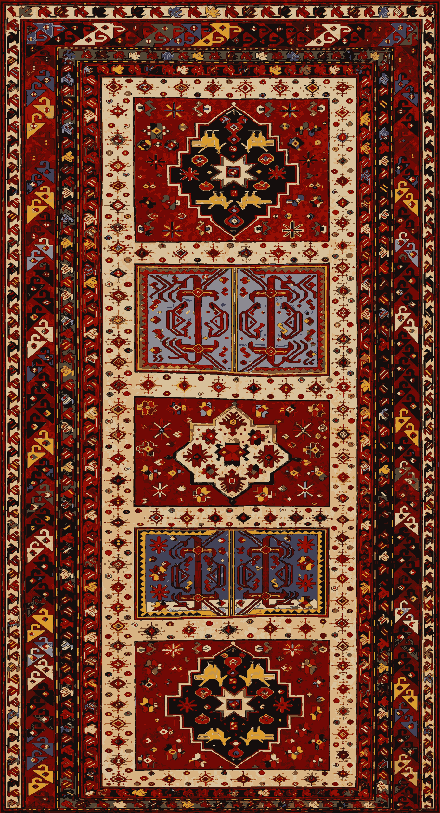
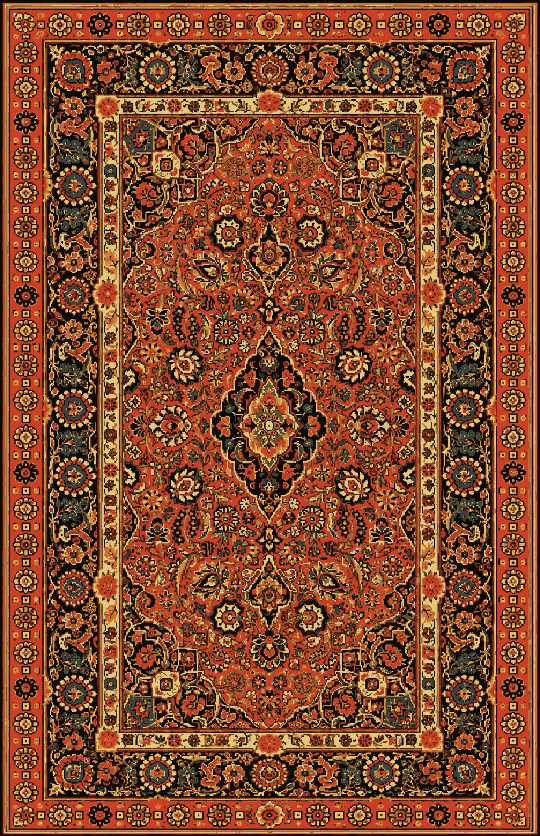
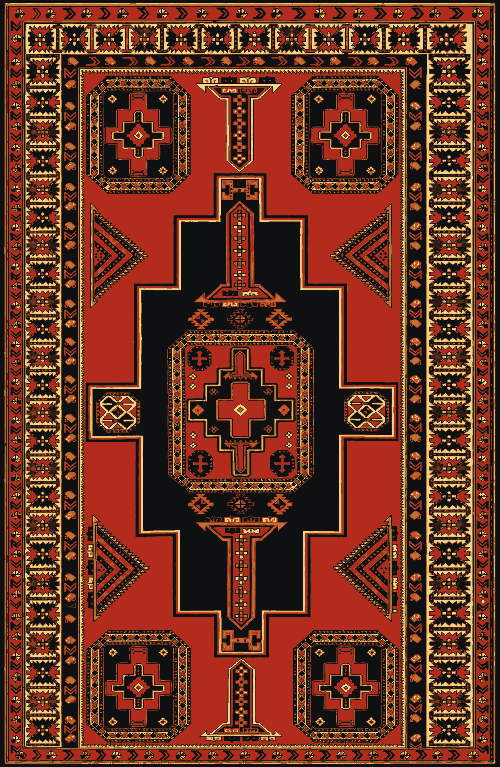
41 documented objects, traced knot by knot and taken apart — every motif named, and carrying the carpet it was cut from.
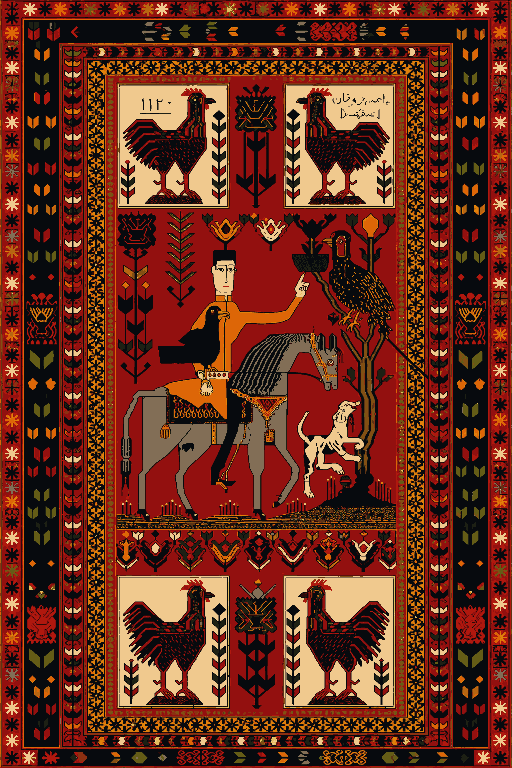
02 · The loom
Then weave one yourself.
Six decisions, in the order a weaver makes them — from the outside in. Every motif on offer was cut out of a real carpet in this collection and carries the object it came from.
- 01The ground
- 02The border
- 03Guard stripes
- 04The field
- 05The centre
- 06Corners
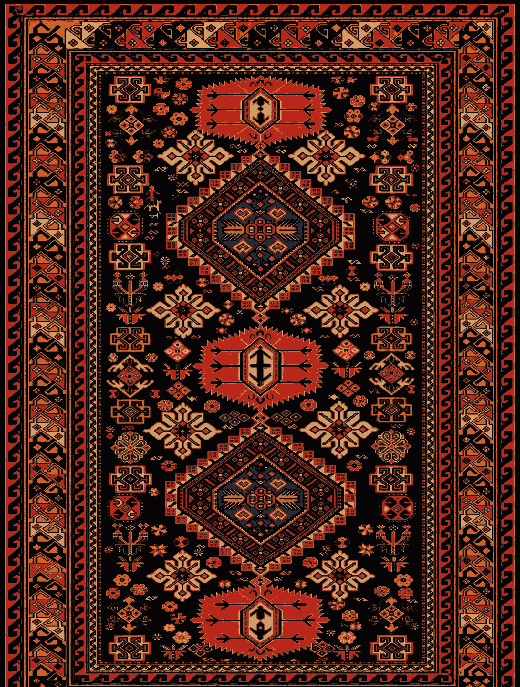
03 · The grammar
The loom only permits straight lines.
A weaver cannot draw a diagonal. A slope has to be assembled from steps, because every knot sits on a grid. Almost everything that looks like stylisation in these carpets is really the memory of that constraint — a leaf reduced to a saw-edged diamond, a bird flattened into polygons.
Once you can see the constraint, the motifs stop being ornament and start being decisions.
04 · The land
Eight weaving centres.
A carpet says where it was made before it says anything else — in its palette, its knot count and which shapes it is allowed to use.
05 · The archive
41 objects, 14,815,696 knots traced.
Each one recovered from a museum plate and redrawn as the lattice it is — so it can be zoomed to the single knot, named part by part, and compared against any other.